

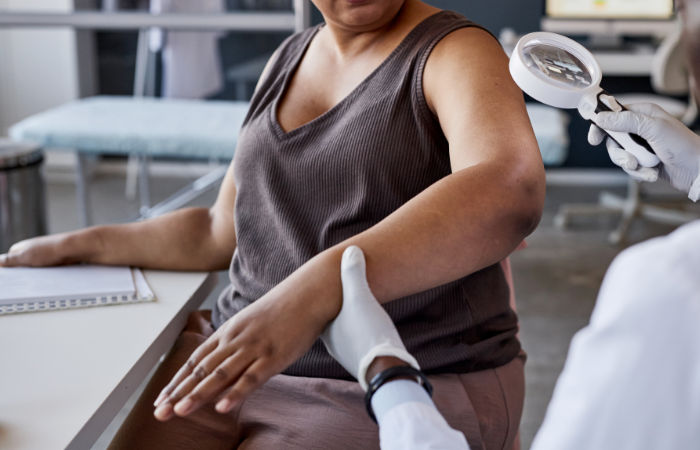
Discovering a spot or noticing a pigment change on your skin can bring uncertainty. It’s often difficult to discern whether a skin growth is a natural part of aging or a concern that requires expert attention.
While most skin growths are benign, reflecting the skin’s natural evolution over time, certain changes may require treatment.
Understanding which changes are expected and which merit professional evaluation helps support long-term skin health.
Common Skin Growths That Are Typically Benign
Skin growths become more frequent as we age. Most are benign, reflecting the normal aging process rather than disease.
- Seborrheic keratoses are among the most common benign growths. They often appear as waxy, slightly raised tan or brown spots on the chest, back, shoulders, and face. Unless cosmetically bothersome, they normally don’t need treatment.
- Skin tags are soft, flesh-colored growths that develop in areas of friction, including the neck, eyelids, and underarms. While harmless, they are easily removed in a clinical setting.
- Cherry angiomas and moles are usually benign and commonly become more noticeable with age. Angiomas appear as small, red vascular spots; moles are generally brown and often remain unchanged for years.
- Cysts and lipomas are benign growths beneath the skin. Cysts are fluid-filled pockets, while lipomas are soft, movable fatty deposits.
Certain changes in appearance or behavior, however, deserve closer clinical assessment.
Recognizing an Abnormal Skin Growth
Visible changes over time are key indicators of abnormal growth.
- Asymmetry and irregular borders are often the initial indicators. While benign growths are generally symmetrical with smooth edges, abnormal growths tend to develop uneven shapes or blurred borders.
- Color variation may signal a need for professional assessment. Most benign growths have a single shade. A growth with multiple shades within a single spot may require a professional evaluation.
- Size and growth rate are critical. While most benign developments remain stable, any growth that changes in size over weeks or months deserves attention.
- Surface changes are equally significant. Crusting, bleeding, itching, or tenderness are all signs that a growth requires dermatologic assessment.
These changes often provide the first cues that a growth may be a clinical concern.
When to Worry About Skin Growths
Beyond appearance, the pattern and evolution of a growth provide the necessary context to determine whether it warrants clinical attention.
- New developments in adulthood typically justify an assessment. Even when they appear benign, a new lesion on mature skin is worth monitoring.
- The “ugly duckling” sign offers additional perspective: any spot that looks noticeably different from the surrounding ones warrants professional attention.
- Non-healing lesions provide the clearest indication that a consultation is needed. Common on sun-exposed skin, rough patches or sores that crust or fail to heal merit prompt evaluation.
- Personal and family histories are equally significant. Those with considerable sun exposure or a first-degree relative with melanoma may benefit from screenings.
A careful evaluation by a dermatologist determines whether to treat, remove, or monitor the growth.
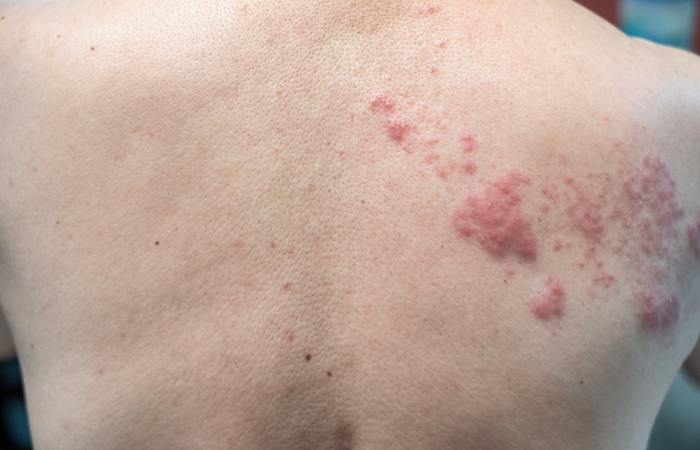
Skin Growth Removal: Evaluation and Treatment Options
Removal begins with identifying whether treatment is medically needed or personally preferred.
- Clinical evaluation and dermoscopy are foundational. A dermatologist evaluates shape, texture, color, and borders alongside your history of change. Dermoscopy provides an enhanced view of pigment networks and vascular structures to ensure an accurate assessment.
- A biopsy delivers clarity; a tissue sample provides histologic confirmation of whether the growths are benign, precancerous, or malignant.
- Benign growths may be removed with a shave technique, cryotherapy, or electrodessication. Each method is selected strategically based on the growth type, location, and the patient’s cosmetic priorities.
- Surgical excision and Mohs micrographic surgery address deeper lesions; Mohs is often the preferred method to preserve tissue in cosmetically sensitive areas.
Beyond evaluation and treatment, it is essential to design a thoughtful plan for maintaining long-term skin health and vitality.
The Value of Regular Skin Checks
Regular checks are an effective strategy for early detection and long-term skin health.
- A full-body examination with a board-certified dermatologist establishes a clinical baseline, making it easier to identify and evaluate subtle changes over time.
- Self-checks between appointments are equally valuable, helping you spot new or evolving growths.
- Coastal living makes vigilance especially important, as increased ultraviolet exposure raises the likelihood of sun-related growths.
- Continuity of care through an ongoing relationship with a dermatologist helps ensure early detection. This preventative approach is the foundation of lasting skin health.
Personalized Skin Care in Charleston and Mt. Pleasant
At Réforme Dermatology & Aesthetics, determining the nature of your skin growths begins with an evaluation grounded in personalized care and a preventative approach. Dr. Gabriella Vasile, double board-certified and fellowship-trained, brings a compassionate, science-based perspective to every thorough assessment.
How Can You Tell If a Skin Growth Is Cancerous?
No single visual feature confirms malignancy. Because benign and cancerous growths share similar characteristics, a diagnostic evaluation helps provide certainty. This professional assessment offers objective clarity and true peace of mind.
We invite you to our clinical suites in Charleston for a personalized consultation with Dr. Vasile. With a compassionate approach, she will evaluate your skin growths and design a protocol tailored to your long-term skin health and well-being.