

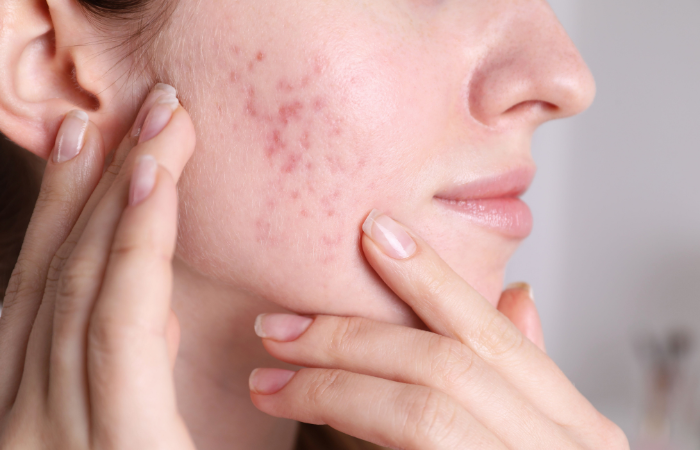
Acne breakouts in adulthood can erode confidence and cause quiet frustration when products that helped during adolescence don’t solve the problem.
Understanding how to get rid of adult acne begins with a simple recognition: it is a medical condition with root causes. These are often biological drivers, including hormonal shifts, slowed cellular turnover, and stress.
Main Causes of Acne in Adults
As adult acne involves biological mechanisms that differ from adolescent breakouts, treating them the same way rarely works. Adults need acne treatments specific to their unique hormonal signaling, inflammatory response, cellular turnover, and skin’s oil production.
- Hormonal fluctuations commonly trigger acne in adults. The androgen hormone acts as a regulator of oil production. Elevated androgens signal the skin to increase oil production, creating the conditions for acne breakouts. This is particularly common for women during their menstrual cycles, during pregnancy, and while transitioning into menopause.
- Slowed cellular turnover is often a factor. As we age, dead skin cells shed less efficiently and accumulate in the follicles, trapping oil and bacteria. This congestion creates blockages deep in the pores, often leading to inflammation and blemishes.
- Chronic stress can contribute. When under stress, our bodies produce elevated cortisol levels, stimulating the overproduction of oil that can lead to skin inflammation. Stress-driven adult breakouts tend to cluster along the jawline, chin, and neck.
- Diet, exercise, and gut health can significantly affect adult acne. Medications, including corticosteroids and some blood pressure treatments, can be contributing factors. A thorough clinical evaluation considers these variables to take a whole-body approach to treating your skin.
While identifying the triggers of adult acne is essential, it’s equally important to determine the type.
What is my acne type?
Not all acne is the same – and the classification shapes the treatment approach.
- Comedonal acne is typically mild and appears with blackheads, whiteheads, and small flesh-colored bumps. With this common acne type, pores typically get blocked by oil and dead skin cells, causing inflammation under the skin’s surface.
- Inflammatory acne commonly shows up as bumps that are red, hard, and tender, as well as whiteheads with white or yellowish centers. As bacterial activity in the follicle is a common underlying cause, inflammatory acne typically responds well to topical therapies and, in some cases, oral antibiotics.
- Cystic acne develops deeper within the skin, causing painful nodules beneath the surface and carrying a significant risk of scarring if left untreated.
- Hormonal acne typically has a distinct pattern, appearing as deep cysts along the jawline, chin, and lower cheeks. These breakouts often flare in sync with your body’s hormonal calendar, which triggers excess oil production.
With the acne type identified, the treatment path comes into clear focus.
Effective Treatment for Acne
Adult acne responds well to a layered approach that addresses the surface presentation and its underlying drivers.
- Topical retinoids are a foundational way to achieve healthier skin. Derived from vitamin A, these accelerate cellular turnover and reduce follicular blockage, helping the skin gradually resurface and naturally repair.
- Oral medications treat from within and are often effective against persistent or hormonally driven acne. Antibiotics such as doxycycline can help reduce bacterial activity and inflammation, while hormonal therapies, including spironolactone, can help regulate the skin’s oil production.
- In-office treatments can play a meaningful role. Chemical peels resurface the skin by gently exfoliating cellular buildup to restore clarity.
- A curated skincare regimen sustains results between appointments. Using medically prescribed products can meaningfully reduce breakouts and sustain the skin’s natural balance.
Rarely a single solution, effective treatment typically takes a comprehensive approach that evolves with your changing skin profile.
When should I see a dermatologist for acne?
For those seeking results beyond over-the-counter limits, professional dermatological care offers a clinically superior path forward.
- An accurate diagnosis changes the trajectory of your care. By evaluating the classification of the acne, its severity, inflammation level, and underlying drivers, a dermatologist provides diagnostic clarity and offers prescription-strength solutions.
- Proactive care is the best strategy against permanent scarring. Through early clinical intervention, you can significantly reduce the risk of uneven texture and residual pigmentation.
- Sustainable skin health is the ultimate objective. Under personalized clinical care, oil production balances, breakouts diminish, and the frequency of flare-ups recedes over time.
Personalized Dermatology Care in Charleston and Mt. Pleasant
At Réforme Dermatology & Aesthetics, we recognize that adult acne is more than a cosmetic inconvenience. It is a clinical condition requiring a personalized approach. Our philosophy prioritizes preventative care and long-term vitality, focusing on the skin’s health at every stage of treatment.
Double board-certified and fellowship-trained, Dr. Gabriella Vasile provides a science-based perspective rooted in the principles of preventative care and natural aging.
What is the best way to get rid of adult acne?
There is no singular path to healthy skin. Lasting results begin with an accurate diagnosis, continue through personalized clinical treatment, and are sustained by a skincare regimen designed to preserve overall skin health.
For patients seeking guidance on how to get rid of adult acne, a thoughtful evaluation can be the first step in creating a clear path forward. We invite you to visit our clinical suites in Mt. Pleasant for a personalized consultation with Dr. Vasile, where we will evaluate your unique needs and develop a protocol designed thoughtfully around your skin.